
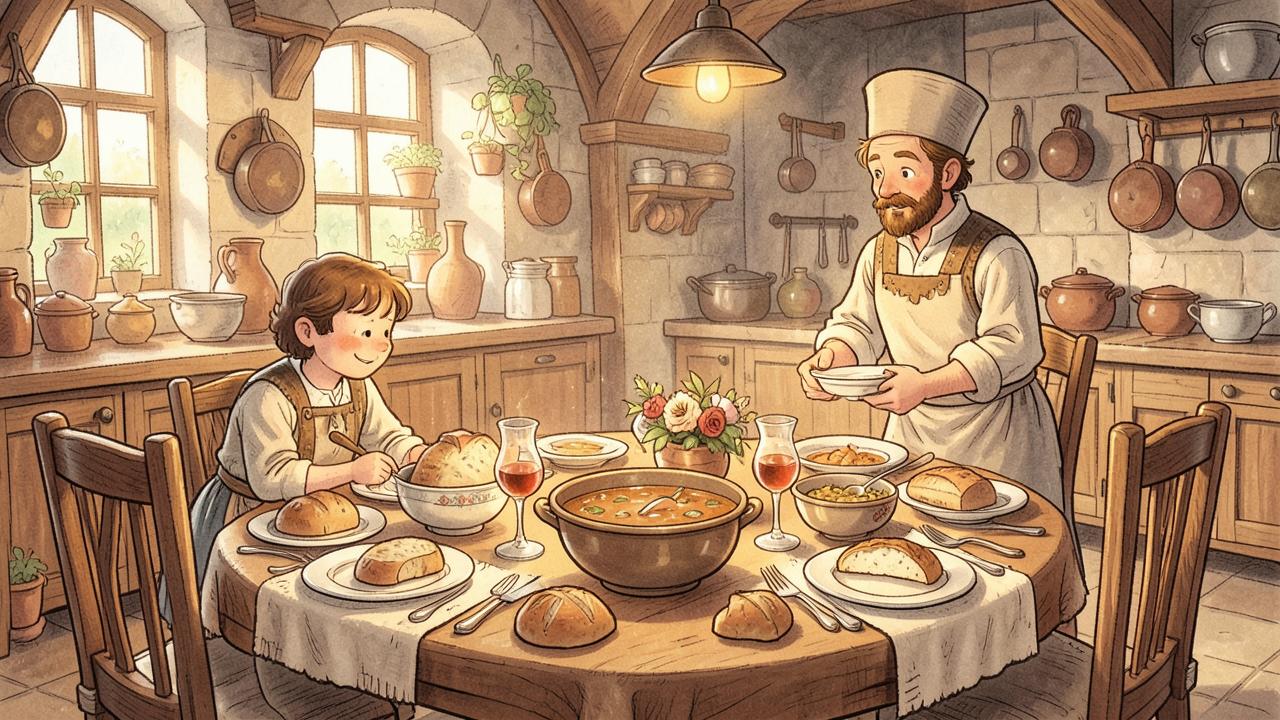
Social class and the pottage pot
In medieval England, your diet was one of the most visible indicators of your social status. For the vast majority of the population—the peasantry—daily life was sustained by pottage. This was a thick stew made from grains like barley or oats, supplemented with peas, beans, and whatever seasonal vegetables were available from their small garden plots. Meat was a rare luxury, usually reserved for special occasions, and was often preserved through salting or smoking to last through the winter. In contrast, the nobility enjoyed a diet rich in fresh meat, including venison, wild boar, and a variety of fowl. While the poor ate from wooden bowls, the wealthy used 'trenchers'—slabs of stale bread that served as edible plates, which were often given to the poor after the meal was finished.
Fasting and the Church calendar
The medieval diet was strictly governed by the rules of the Catholic Church, which mandated that meat could not be eaten on 'fast days', including every Wednesday, Friday, and Saturday, as well as during the seasons of Lent and Advent. This meant that for about a third of the year, everyone from the King to the lowest peasant had to find alternatives to meat. Fish became the primary substitute, leading to a massive trade in salted herring and cod, and the construction of elaborate fishponds on monastic and manorial estates. Interestingly, the definition of 'fish' was sometimes stretched to include other water-dwellers, such as beavers and certain types of water-birds, showing how people found creative ways to follow the letter of religious law while satisfying their appetites.
Spice as the ultimate status symbol
For the medieval elite, the use of exotic spices was the ultimate way to demonstrate wealth and sophistication. Spices such as pepper, cinnamon, ginger, and the incredibly expensive saffron had to be transported thousands of miles along the Silk Road and across the Mediterranean, making them worth their weight in gold. Contrary to the popular myth that spices were used to hide the taste of rotten meat, they were actually used as a highly visible display of conspicuous consumption. A heavily spiced dish was a clear sign to guests that their host was part of a global trade network and had the financial means to afford the finest luxuries the world could offer. The presentation of food was also crucial, with elaborate 'subtleties'—sculptures made of sugar and almond paste—serving as the centrepieces of grand feasts.
Evidence and the historian's task
Historians learn about medieval food from a variety of sources, including the household accounts of great estates, which list every item purchased for the kitchen, and the few surviving cookery books from the late 14th century, such as 'The Forme of Cury'. These records provide detailed information about the diet of the wealthy, but they tell us very little about what ordinary people ate. To bridge this gap, historians look at archaeological evidence, such as the remains of seeds and animal bones found in excavations of peasant dwellings, and the study of 'coprolites' (fossilised waste), which can reveal the exact components of an individual's diet. While the written records are more detailed, they are also more biased, meaning that the combination of science and history is essential for reconstructing the complete story of the medieval table.