
A monument built in phases
Stonehenge was not the result of a single construction project but was built and modified over a period of roughly 1,500 years, beginning around 3000 BCE. The earliest phase consisted of a circular ditch and bank, known as a henge, which contained a ring of 56 pits called the Aubrey Holes. It wasn't until around 500 years later that the famous stone structures were added. This long history of construction suggests that the site remained a place of profound significance for many successive generations of Neolithic and Bronze Age people. The ability to organise such a massive, long-term project without the aid of modern technology or written language is a testament to the sophisticated social structure and shared cultural identity of these ancient communities.
The mystery of the bluestones
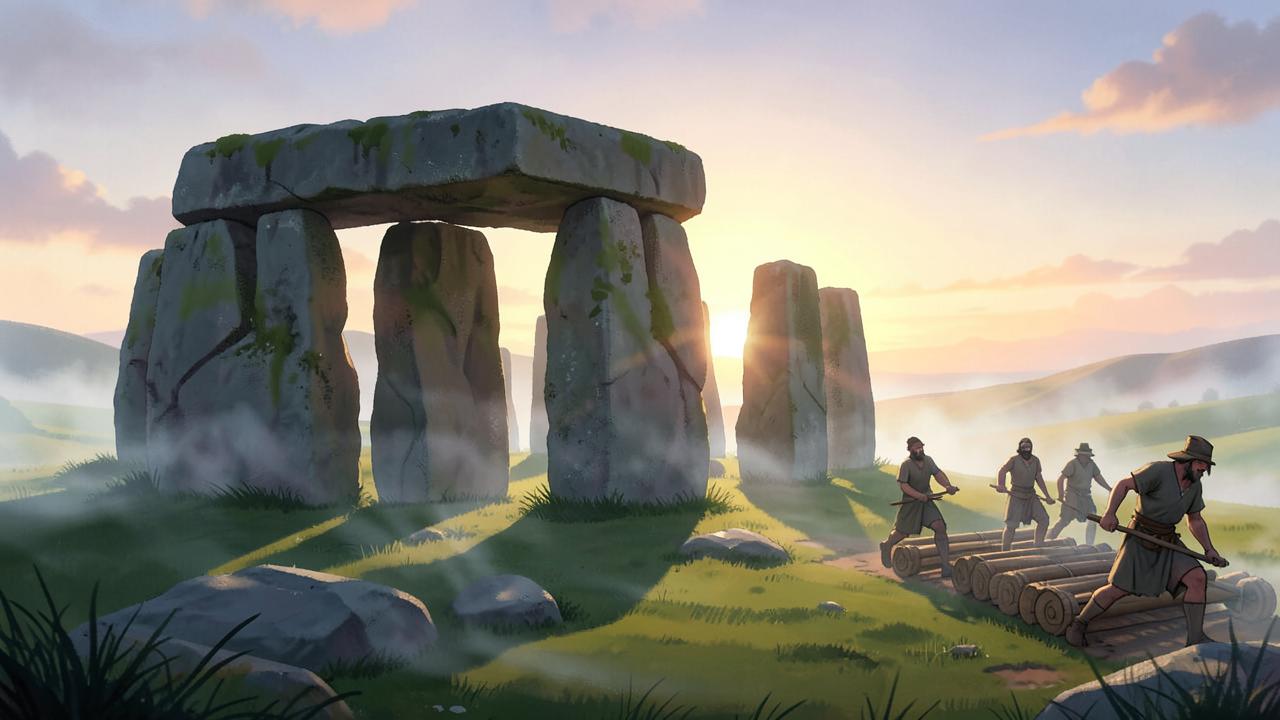
One of the most remarkable aspects of Stonehenge is the origin of its smaller stones, known as 'bluestones'. Geological analysis has proven that these stones, each weighing several tonnes, were transported from the Preseli Hills in West Wales—a distance of over 150 miles. How a Neolithic society without wheels or iron tools achieved this feat is still a subject of intense debate among archaeologists. Some theories suggest they were moved overland on wooden rollers and sledges, while others argue they were transported by sea and along rivers on rafts. Recent isotope analysis of human remains found near the site shows that people also travelled from as far away as the Alps to visit Stonehenge, suggesting it was a major centre of pilgrimage in the prehistoric world.
The purpose of the stones
The true purpose of Stonehenge remains one of history's greatest mysteries, as the people who built it left no written records of their intentions. However, the monument's precise alignment with the movements of the sun provides a powerful clue. The main axis of the stones is perfectly aligned with the sunrise on the summer solstice and the sunset on the winter solstice, suggesting it served as a sophisticated solar calendar or a temple for sun worship. Other theories propose it was a site for healing, a place for ancestral veneration, or a massive cemetery, as evidenced by the numerous burial mounds in the surrounding landscape. The multi-functional nature of the site suggests it likely held different meanings for the various cultures that used it over the centuries.
Evidence and the historian's task
Because Stonehenge is a prehistoric site, historians and archaeologists must rely entirely on physical evidence rather than written documents. This includes the stones themselves, archaeological excavations of the surrounding landscape, and the analysis of human remains and artefacts found at the site. Radiocarbon dating has been essential for establishing the timeline of the different construction phases. However, the lack of written records means that any interpretation of the site's meaning is, to some extent, an educated guess. Historians must be careful not to project modern ideas onto the past and must remain open to new evidence—such as the recent discovery of a much larger 'super-henge' nearby—which can radically change our understanding of how this ancient landscape was used.