
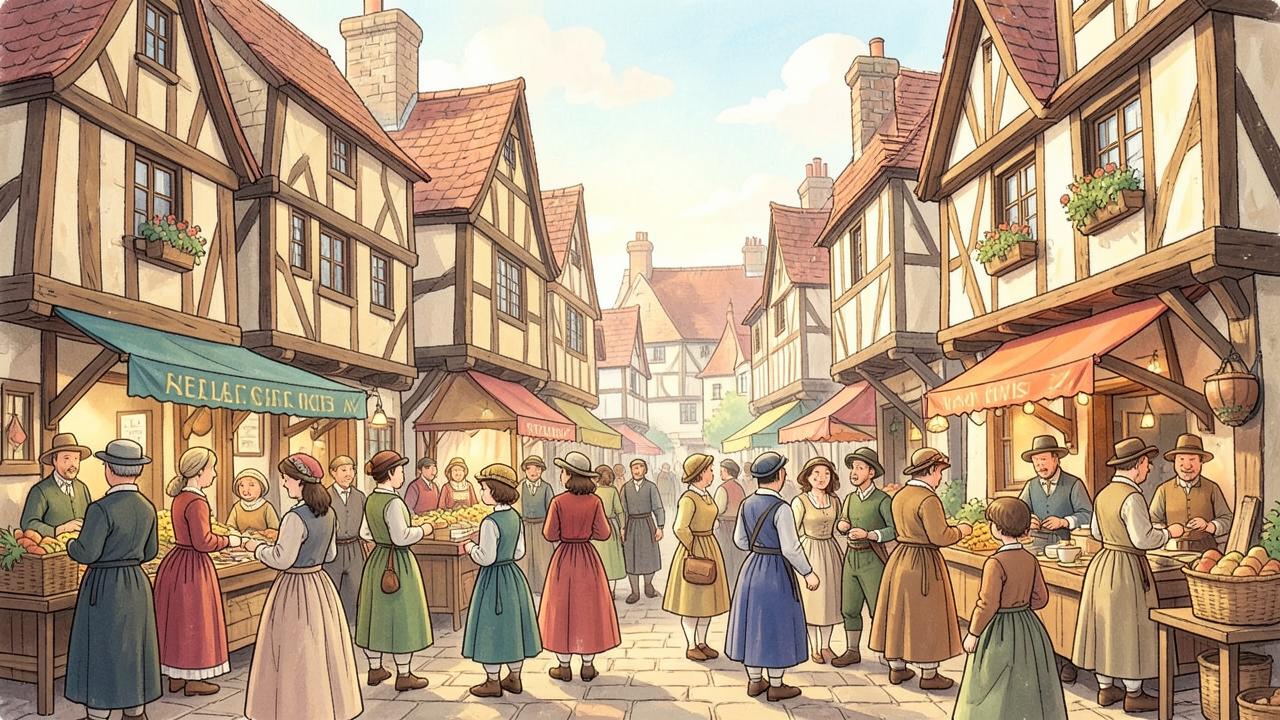
Daily rhythms of a Tudor household
Life for a Tudor household was governed by the rhythm of the church and the seasons. Even the humblest families began their day at dawn, as artificial light was an expensive luxury. Diet was heavily dependent on your status; while a wealthy merchant might enjoy white bread and roasted meat, the vast majority of the population subsisted on pottage—a thick, hearty stew of oats, beans, and whatever seasonal vegetables were available. Small beer was the standard drink for all ages, as water was often contaminated. These routines were not merely habits but were deeply tied to the social order, where the type of bread you ate or the clothes you wore, dictated by strict sumptuary laws, served as a clear marker of your position in the Tudor hierarchy.
The weight of the law
Tudor England was a society obsessed with order and regulation. Sumptuary laws were enacted to maintain a clear visual distinction between the social classes, dictating exactly which fabrics, colours, and styles of clothing were permitted for each rank. To step outside these bounds was not simply a breach of fashion but a legal transgression that could lead to fines or social ostracisation. Similarly, church attendance was compulsory; missing a service without a valid reason was a punishable offence. The church acted as the central hub of community life, serving as both a place of spiritual solace and the primary venue for disseminating royal proclamations and local news, ensuring that every person remained tightly woven into the fabric of the state.
A life of labour and duty
For the common person, life was defined by the relentless cycle of physical labour. Men and women worked in the fields from sunrise to sunset, their lives marked by the back-breaking tasks of ploughing, harvesting, and maintaining the land. Education was a privilege reserved for the very wealthy or the children of the elite who were being trained for service or the clergy. Girls were typically trained in household management, embroidery, and basic nursing, skills considered essential for their future roles as wives and mothers. Despite the harshness of this labour, there were moments of communal celebration, such as feast days, which provided a brief respite from the daily grind and an opportunity for the community to come together.
Evidence and the historian's task
Understanding the lives of ordinary Tudors is a complex challenge for historians because the majority of people were illiterate and left no written records of their own. Most surviving sources—such as court records, tax registers, and the private correspondence of the wealthy—were written by those in positions of power. Historians must therefore use these documents with caution, looking for 'silences' and reading between the lines to reconstruct the experiences of those who were excluded from the official record. When accounts are limited or biased, historians rely on archaeological evidence, such as abandoned buildings or domestic items, to corroborate or challenge the written narrative. Recognising these limitations is a crucial part of historical work, as it highlights that the history we have is often a partial and selective view of the past.