
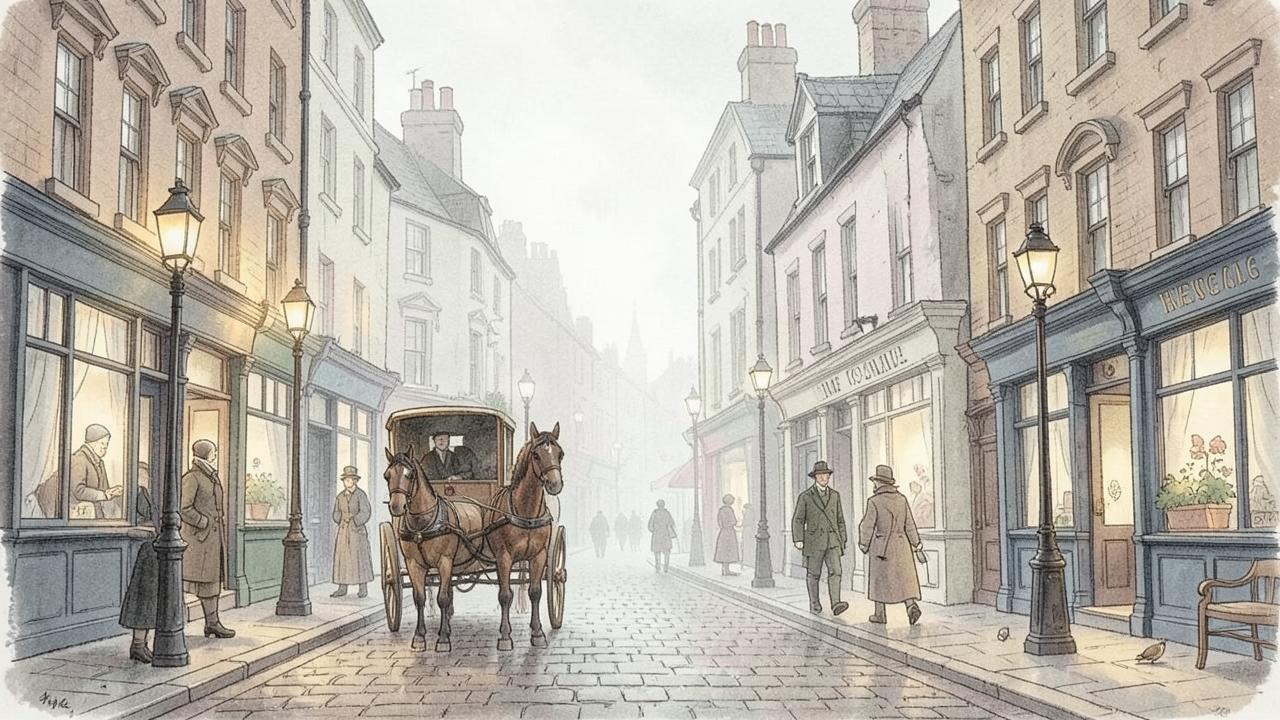
The Great Stink
By the mid-19th century, London had become the largest and most industrialised city in the world, but its infrastructure was failing to keep pace with its rapid growth. The River Thames had become an open sewer, choked with industrial waste and human excrement, leading to a period in the summer of 1858 known as 'The Great Stink'. The smell was so overwhelming that it famously interrupted sessions of Parliament, forcing politicians to finally take action. This crisis led to the construction of a massive new sewage system, designed by Joseph Bazalgette, which remains a cornerstone of London’s infrastructure today. The story of the Great Stink illustrates how environmental crisis can be a powerful catalyst for political and engineering innovation in a rapidly changing urban landscape.
John Snow and the Broad Street pump
During the Victorian era, cholera was a terrifying and poorly understood disease, with frequent outbreaks claiming thousands of lives. Most people believed it was spread by miasma, or 'bad air', until a doctor named John Snow began a pioneering geographical study. During the 1854 outbreak in Soho, Snow mapped the locations of cholera deaths and noticed they were clustered around a single water pump on Broad Street. By convincing the local authorities to remove the pump handle, he successfully halted the outbreak and provided definitive evidence that cholera was a water-borne disease. His work laid the foundations for modern epidemiology and demonstrated the power of data mapping and scientific observation in solving public health mysteries, even when they challenged the established medical wisdom of the day.
The Industrial City and child labour
Victorian London was a city of extreme contrasts, where the immense wealth of the industrial revolution sat side-by-side with crushing poverty. For many children, the city was not a place of school and play, but one of relentless toil in factories, docks, and as street sweepers or 'mudlarks' scavenging in the Thames. The Factory Acts were gradually introduced to limit the hours and ages of child workers, but enforcement was often weak, and many families were so desperate for income that they had no choice but to send their children to work. These conditions inspired the social reform movements of the late 19th century and the vivid, critical depictions of the city in the novels of Charles Dickens, which sought to bring the plight of the urban poor to the attention of the comfortable middle classes.
Evidence and the historian's task
Historians study Victorian London using a wealth of official documents, including census records, parliamentary reports, and the detailed maps of social reformers like Charles Booth, who colour-coded every street in London by its poverty level. While these records are incredibly detailed, they often reflect the perspectives of middle-class observers and government officials who viewed the poor as a problem to be solved rather than as individuals with their own stories. Historians must therefore supplement these official records with letters, newspaper reports, and the growing body of literature from the time. By comparing the 'top-down' view of the census with the 'bottom-up' view of personal accounts, historians can develop a more nuanced understanding of how different social classes experienced the challenges and opportunities of the Victorian metropolis.