
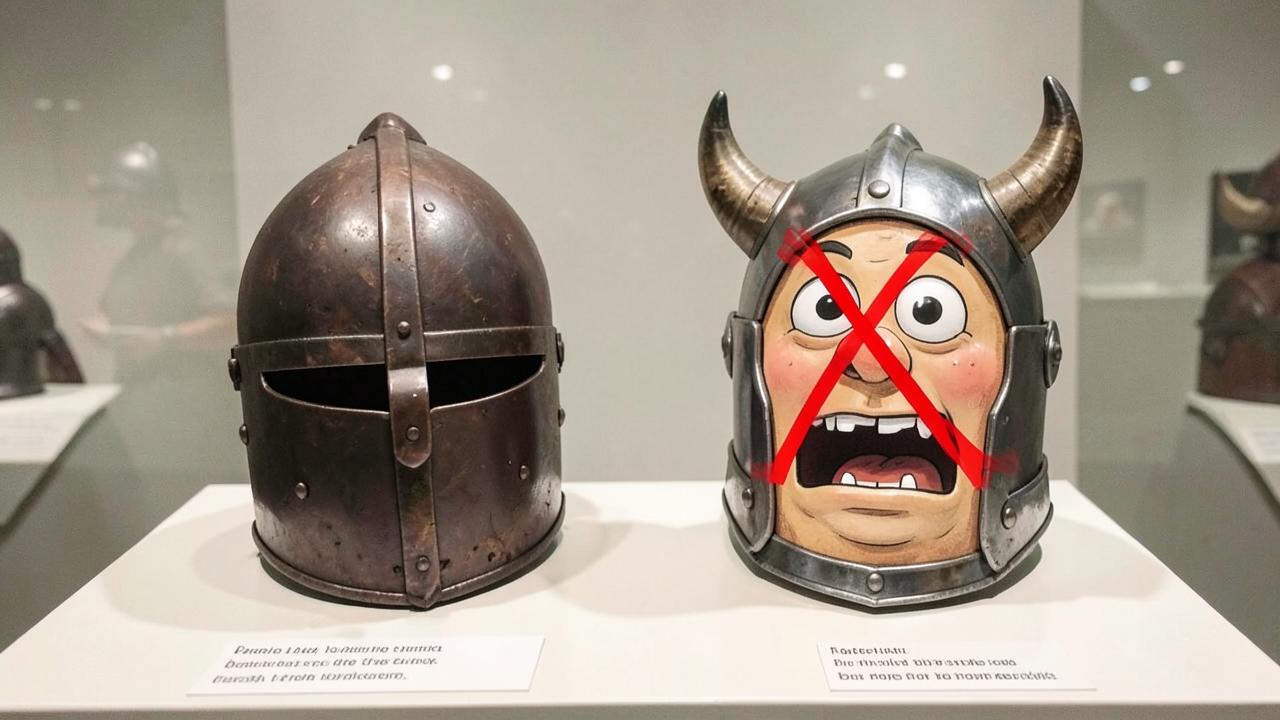
The horned helmet invention
The image of a Viking warrior wearing a helmet adorned with dramatic bull or raven horns is one of the most persistent myths in history, but it is almost entirely a 19th-century invention. Archaeological excavations across Scandinavia and Britain have unearthed only a single complete Viking-age helmet—the Gjermundbu helmet—which features a simple, rounded iron cap with a protective 'spectacle' guard for the eyes and nose, but no horns. The popular horned image was largely created by costume designers for Richard Wagner’s opera cycle, 'The Ring of the Nibelung', and was later adopted by Victorian artists who wanted to portray the Vikings as 'noble savages'. In reality, horns would have been a massive disadvantage in battle, providing an easy handhold for an opponent to grab or a weapon to snag on, making them completely impractical for actual combat.
Raiders, traders, and settlers
While the Vikings certainly conducted violent raids on monasteries like Lindisfarne in 793 CE, they were far more than just marauding warriors. They were sophisticated traders whose networks stretched from North America to the Middle East, exchanging Northern luxuries like fur, amber, and walrus ivory for silk, silver, and spices. Their shallow-draft longships were a marvel of engineering, allowing them to sail across open oceans and navigate deep into the interior of Europe along shallow rivers. This versatility led them to become permanent settlers rather than just temporary raiders; they founded cities like York (Jorvik) and Dublin, and established stable farming communities in Iceland and Greenland. The 'Viking Age' was as much about migration and economic expansion as it was about conflict.
Shield-maidens and gender roles
The role of women in Viking society was significantly more complex and influential than in many other contemporary European cultures. While men were often away on trading or raiding expeditions, women were responsible for managing the farm, the finances, and the household, often holding a high degree of authority within the community. The existence of 'shield-maidens'—women who fought as warriors—is a subject of ongoing debate. While Norse sagas are full of stories of fierce female fighters like Lagertha, archaeological evidence has been less clear. However, the 2017 DNA analysis of a high-ranking warrior burial in Birka, Sweden, revealed that the individual, buried with a full set of weapons and two horses, was biologically female. This discovery has forced historians to reconsider their assumptions about gender roles and the possibility of women taking on military leadership roles in the Viking world.
Evidence and the historian's task
Historians reconstruct the Viking world by balancing two very different types of evidence: the Norse Sagas and the archaeological record. The Sagas are epic stories of heroes and gods, but they were written down by Christians in Iceland several centuries after the events they describe, meaning they are often influenced by later beliefs and literary flair. In contrast, archaeology provides a more direct but fragmented view through the study of burials, hoards, and the remains of settlements. A major challenge for historians is that the Vikings themselves left very few written records other than short runic inscriptions on stone or bone. By comparing the vivid stories of the Sagas with the physical evidence of archaeology, historians must decide which 'facts' are genuine and which are later embellishments, a process that continues to change our understanding of this fascinating period.