
← Science Lab

Particles and states

Why does ice float when almost nothing else does?

Freeze water and it gets bigger. That oddity keeps lakes alive all winter.

Article12 minScience
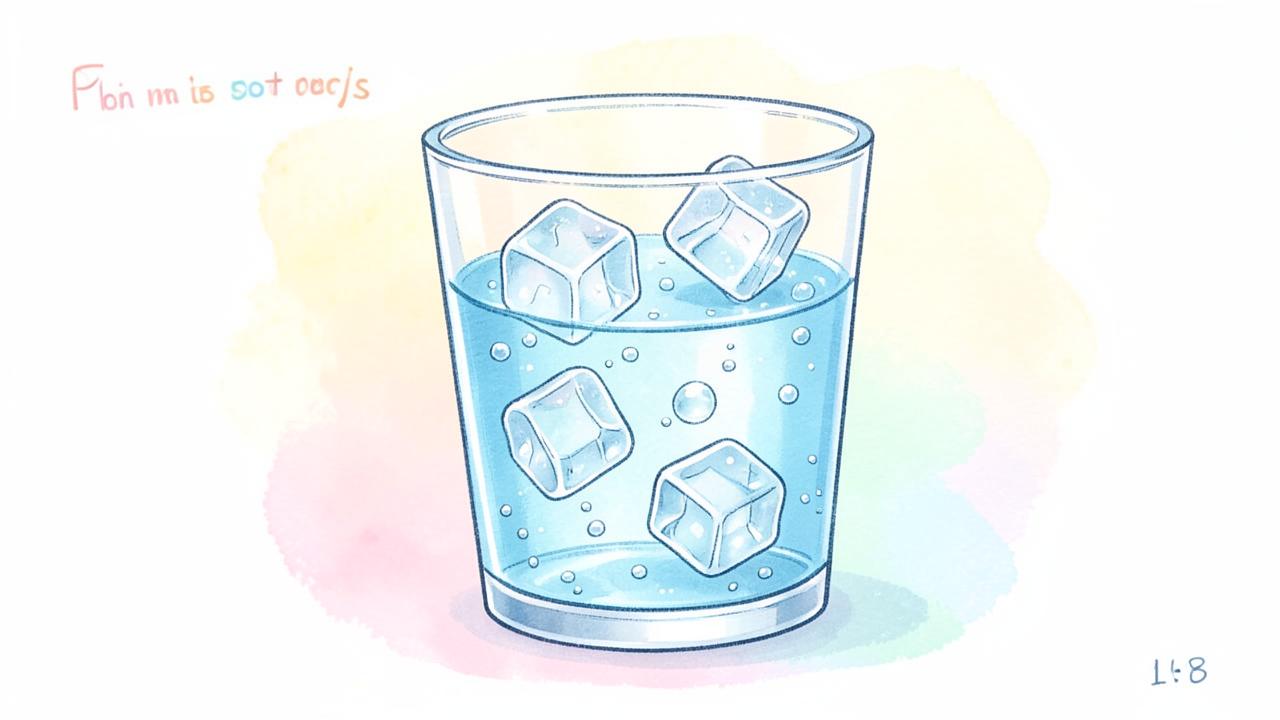
Why does ice float when almost nothing else does? — illustration

The usual rule

Cool most substances and their particles slow, sit closer together and take up less space. The solid is denser than the liquid, so it sinks.

Water breaks the rule

As water freezes, its molecules lock into an open six-sided lattice held apart by hydrogen bonds. That structure has gaps, so ice is about 9% less dense than liquid water.

Why it matters to living things

Ice forms a lid on a pond instead of filling it from the bottom up. Water below stays liquid, and fish, insects and plants survive the winter under it.

Check your understanding

1. Why is ice less dense than liquid water?
2. Roughly how much less dense is ice than water?
3. Why does this matter for a frozen pond?

Your turn

Sketch water molecules as a liquid and as ice, and label where the gaps appear.

Luna: Only if you feel up to it — one more?

Ask the AI tutor

Curriculum objectives covered

  • Understand the properties of the different states of matter in terms of the particle model
  • Understand changes of state in terms of the particle model
Good Learning Co. — personalised UK curriculum learning, built around what each learner loves.